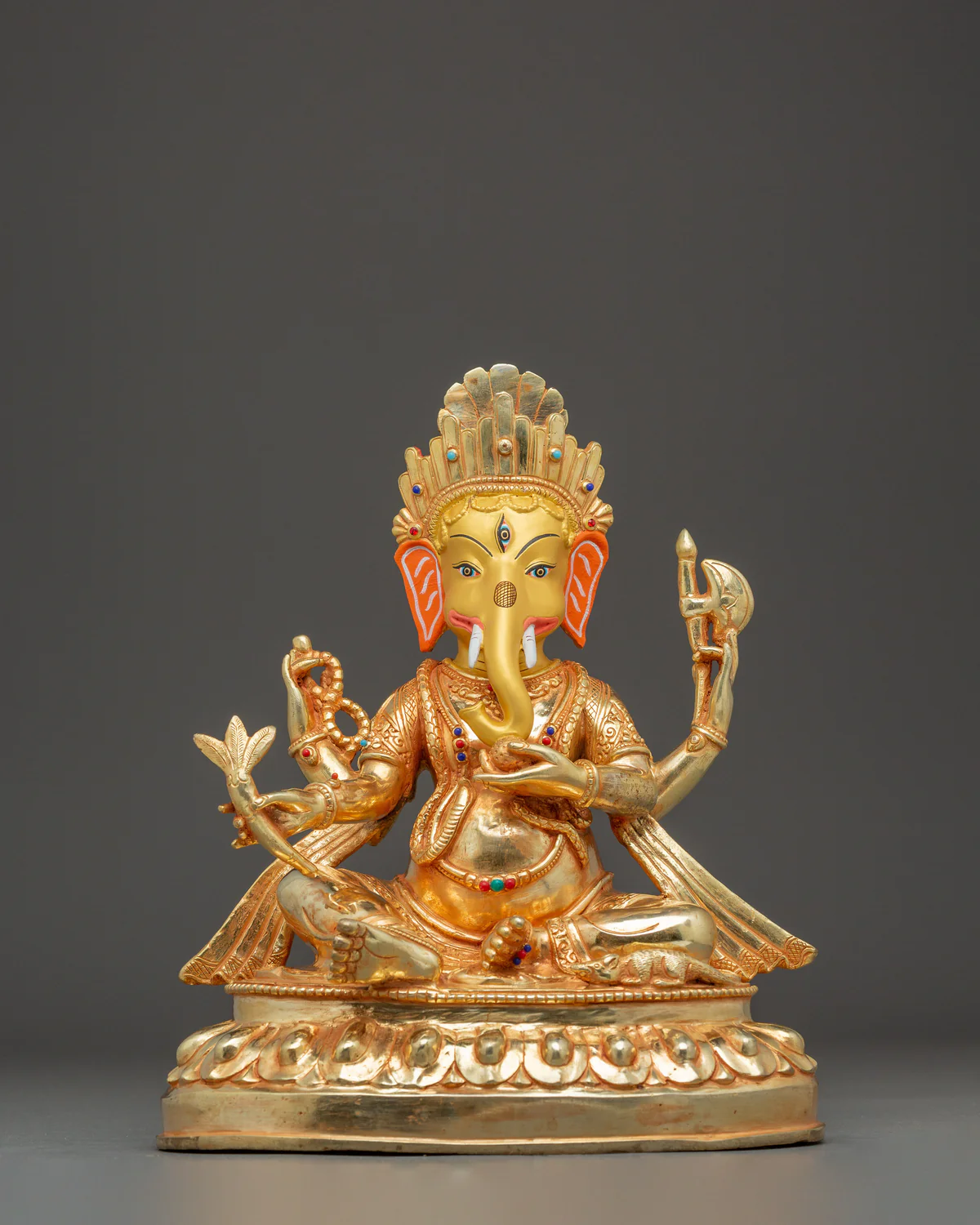
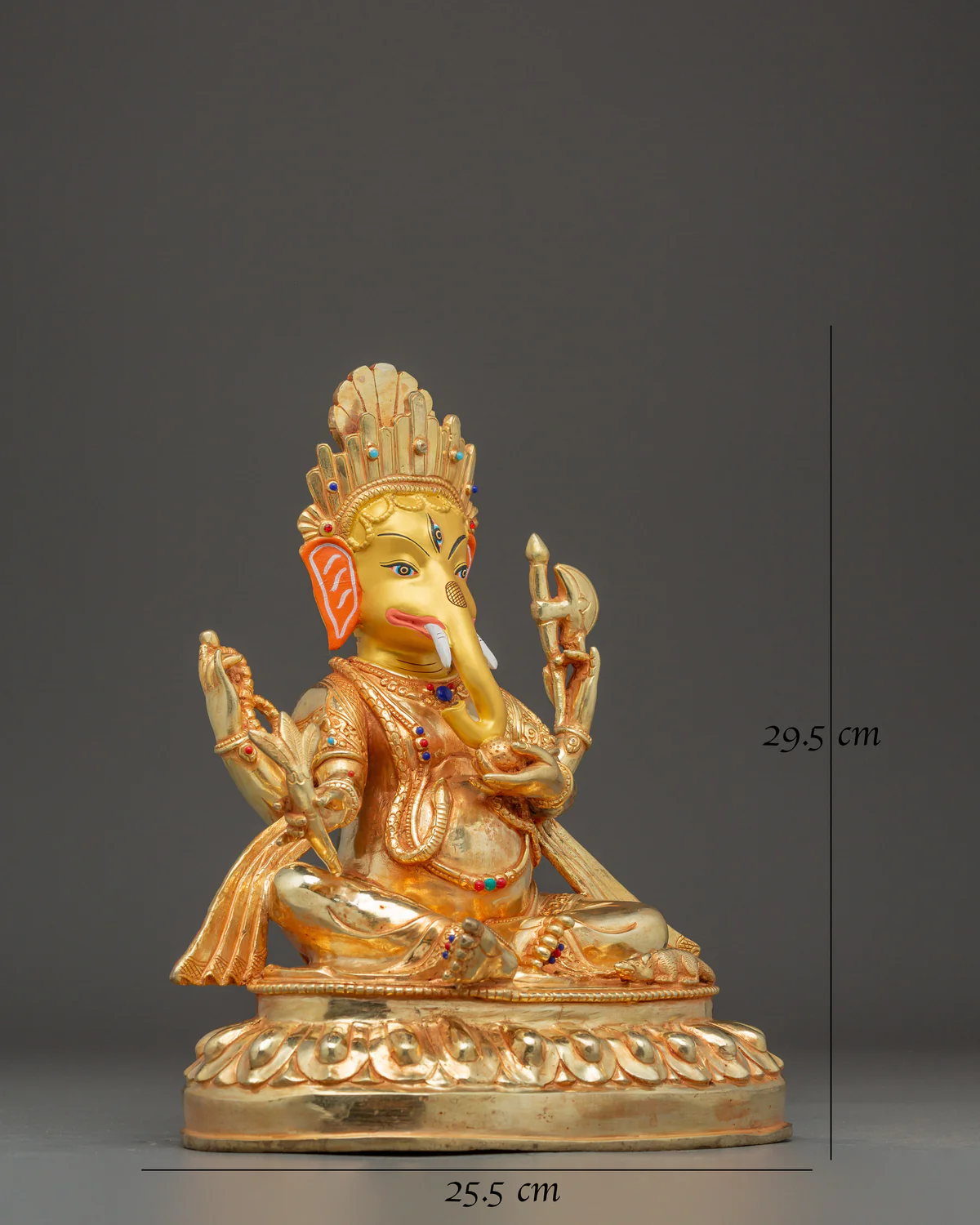
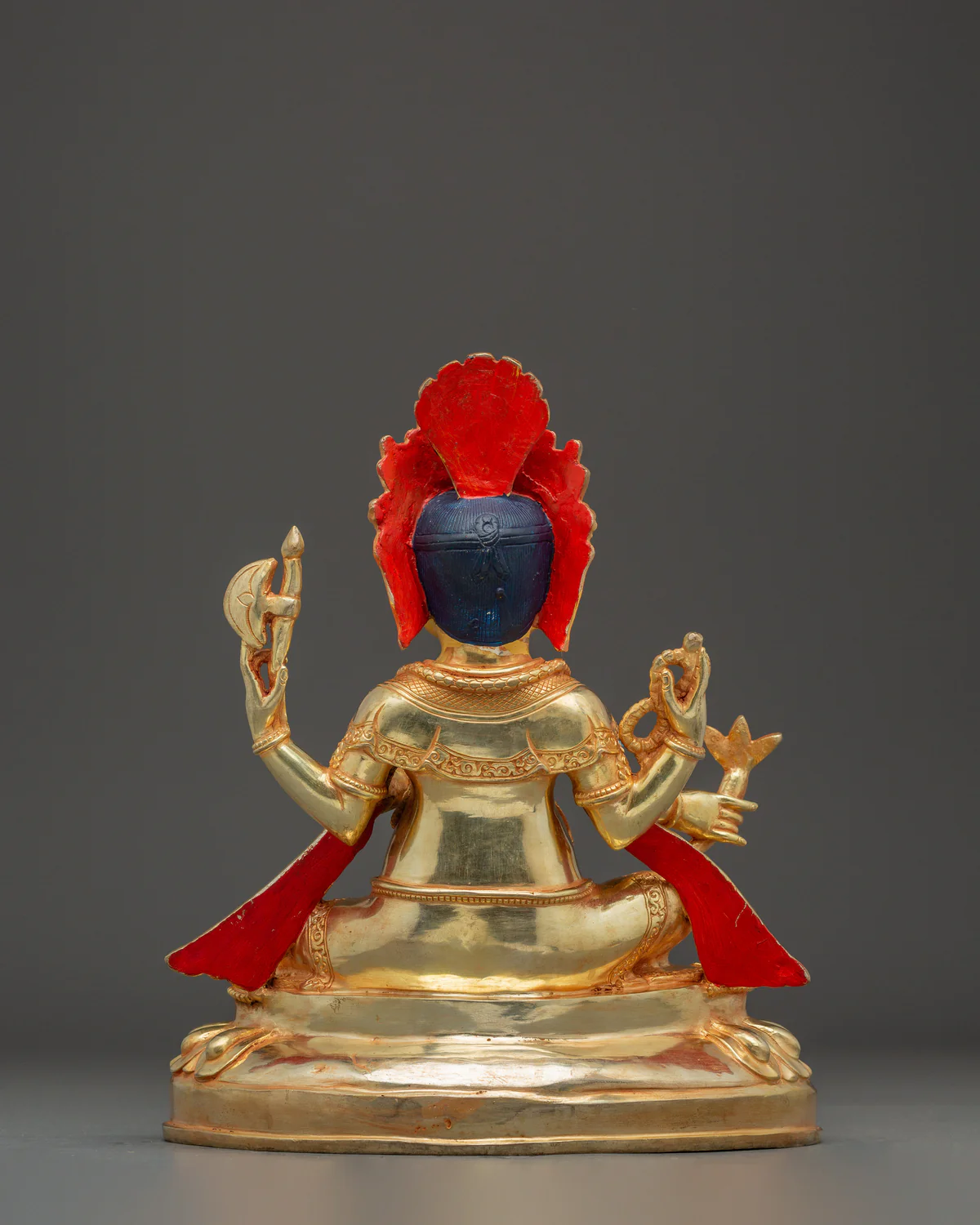
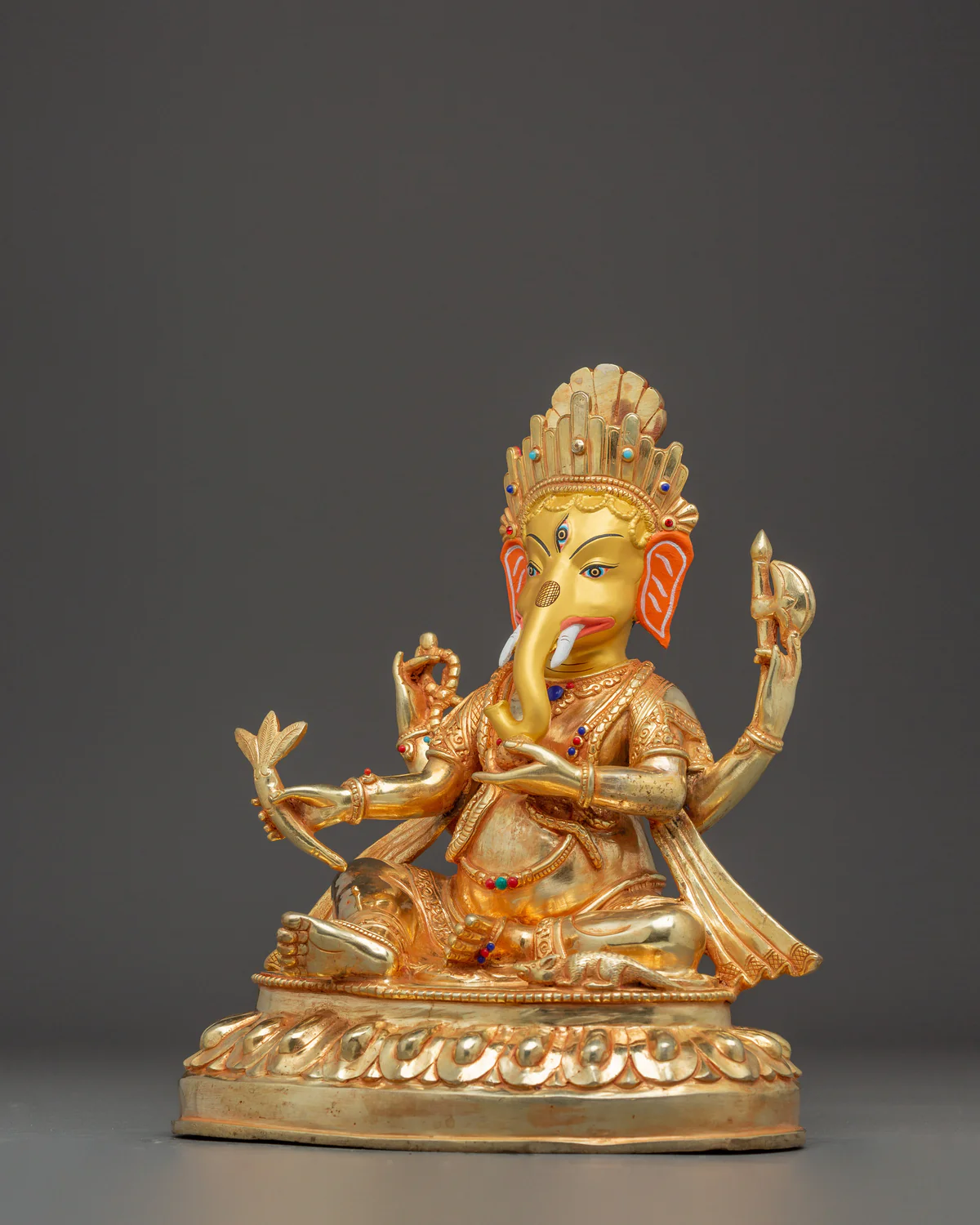
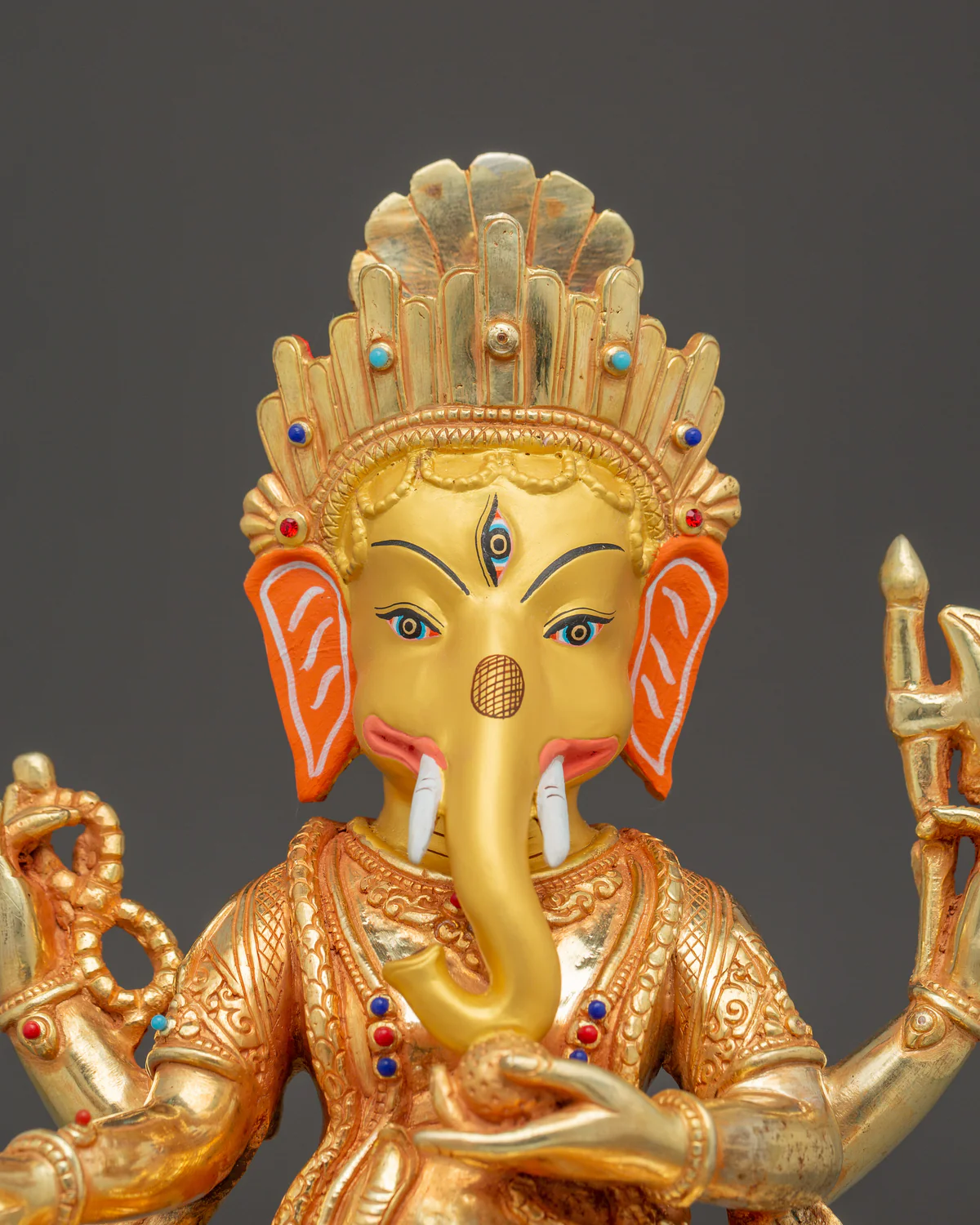
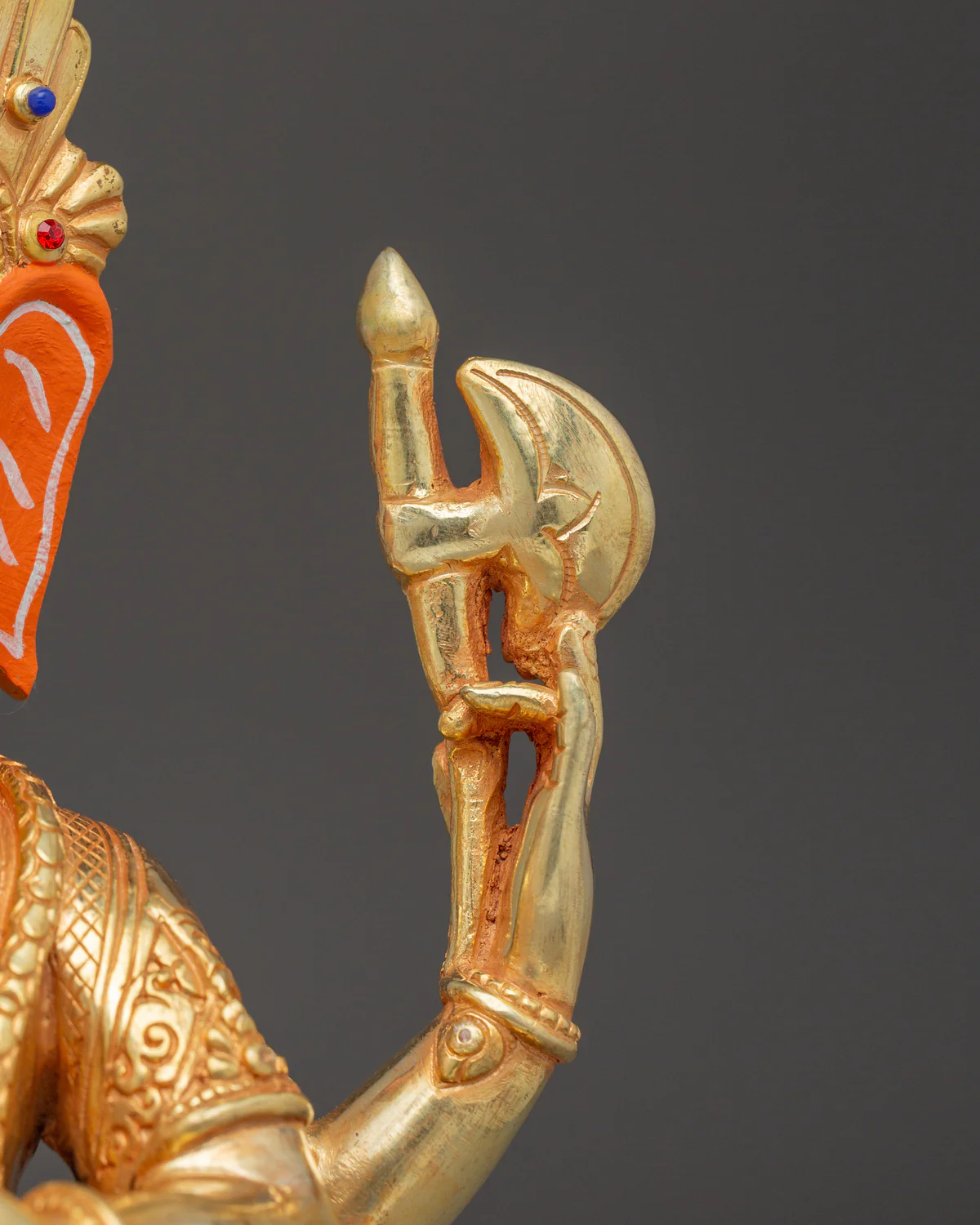
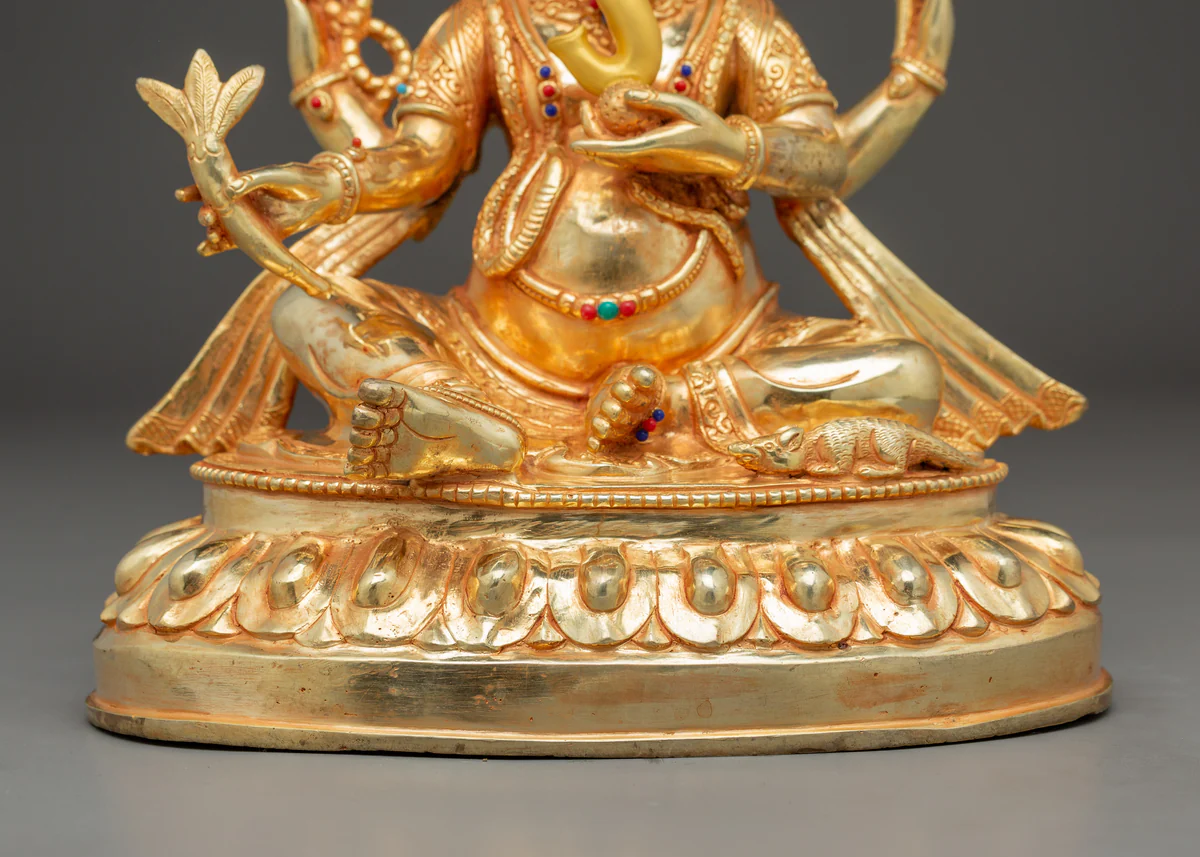
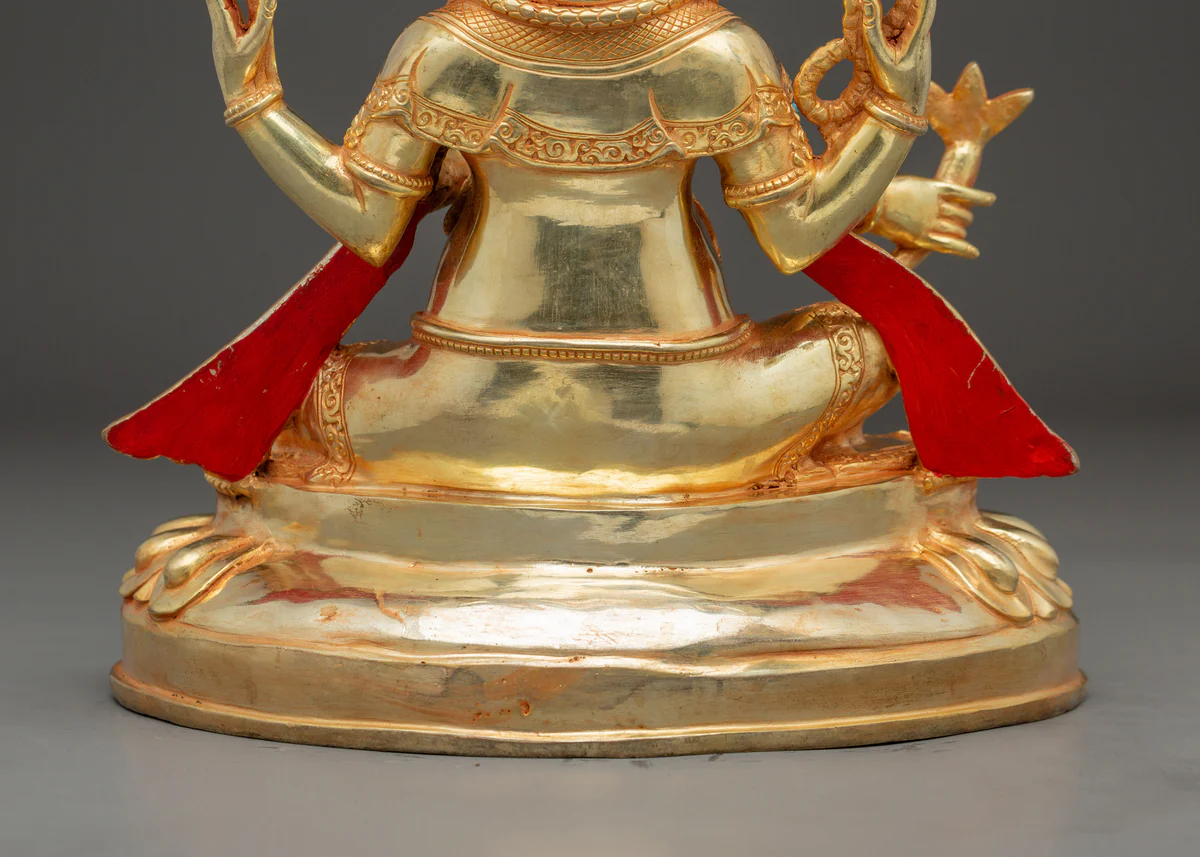
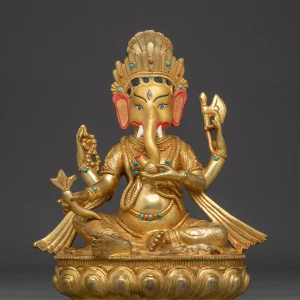
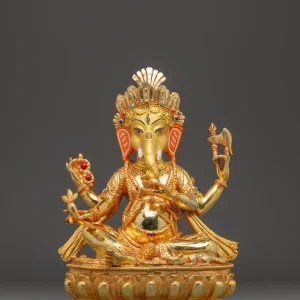
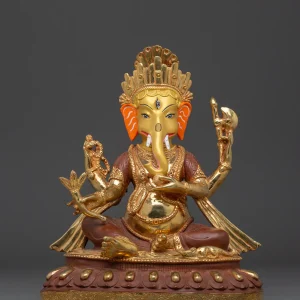
In Tibetan Buddhism, Ganesha is known as Tsog Dag or Ganapati, and while he originates from Hindu tradition, he is integrated into Vajrayana practices with unique meanings. Rather than only being a remover of obstacles in worldly life, Tibetan Buddhists see him as a protector of the Dharma and a guardian of prosperity and abundance for spiritual practitioners.
Symbolism in Tibetan Context
-
Elephant Head – Symbolizes vast wisdom and boundless compassion.
-
Seated Posture – Represents stability and protection of spiritual teachings.
-
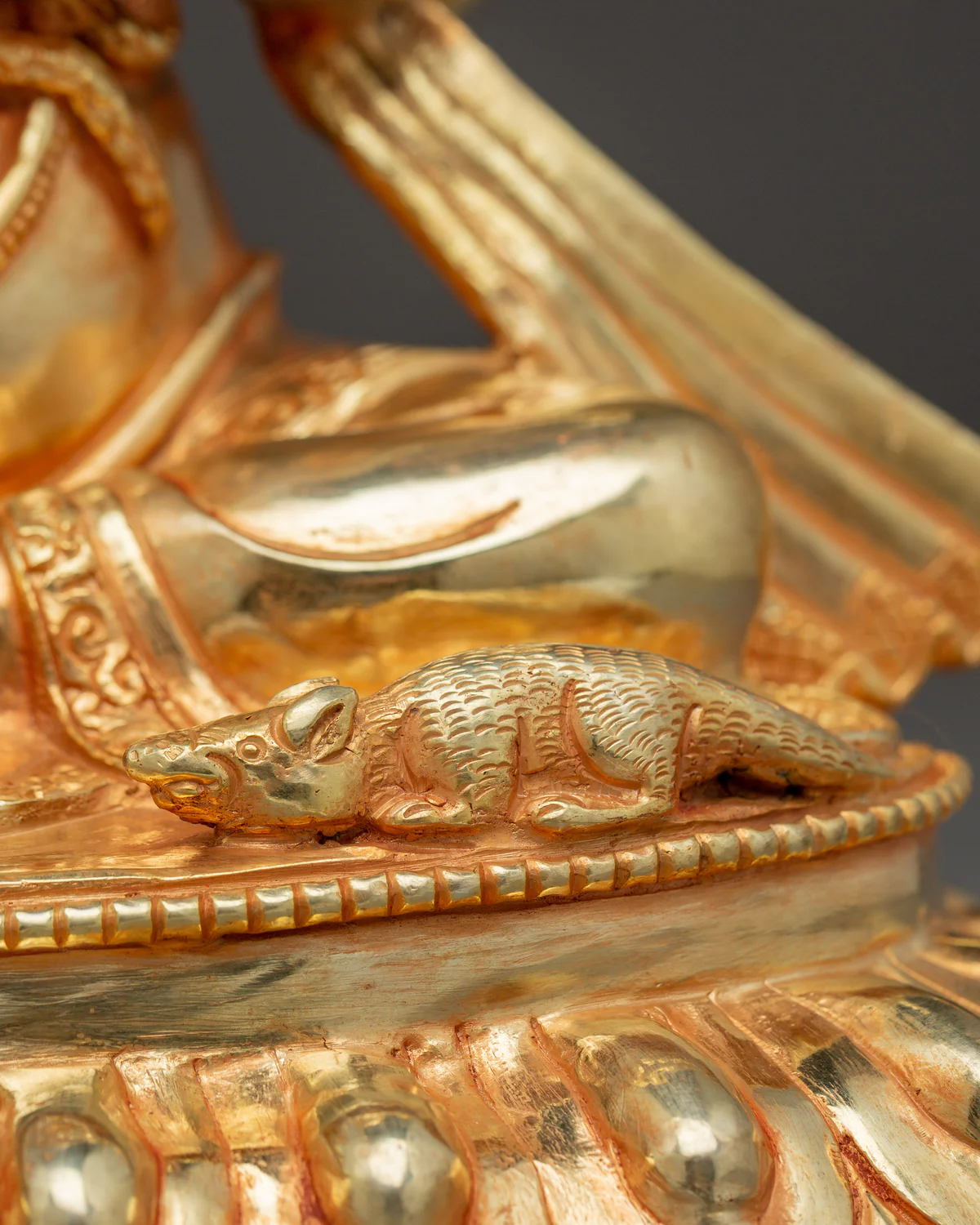
Mouse Mount (Vahana) – Signifies the ability to overcome even the smallest inner obstacles and desires.
-
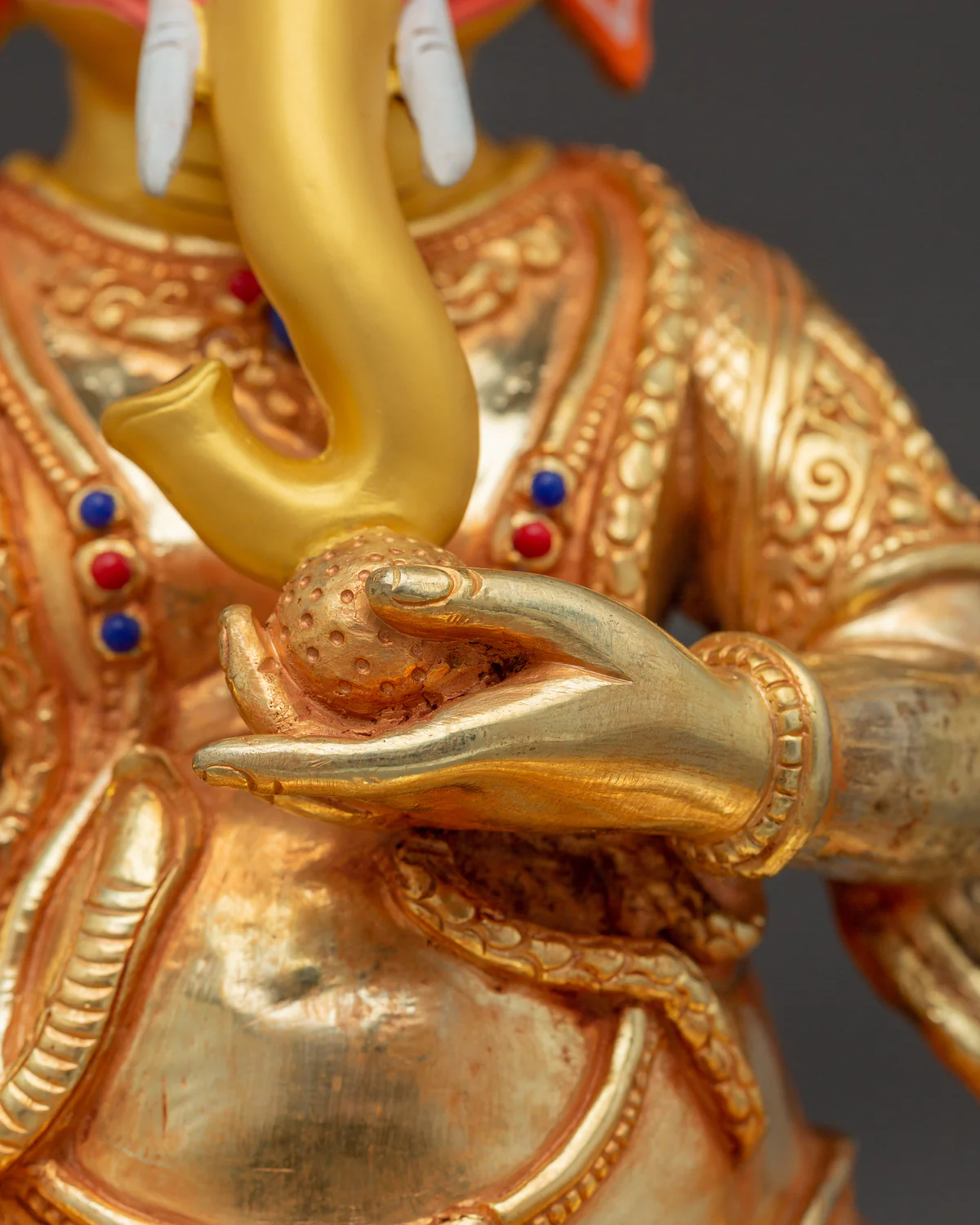
Offerings of Jewels or Food – Symbol of wealth and sustenance provided to sincere practitioners.
Role in Tibetan Rituals
-
In some practices, Ganesha is invoked before beginning important ceremonies or tantric sadhanas to remove unseen obstacles.
-
In certain lineages, he is linked with prosperity rituals and is sometimes depicted in red or white forms.
Blessings of a Ganesha Statue in Tibetan Belief
-
Supports smooth spiritual progress by clearing inner and outer hindrances.
-
Brings material stability so practitioners can focus on the path.
-
Protects sacred spaces from negative energies and influences.
Reviews
There are no reviews yet.