



རྡོ་རྗེ་རྣལ་རྗོང་མ་ • Dorje Naljorma (Vajrayoginī)
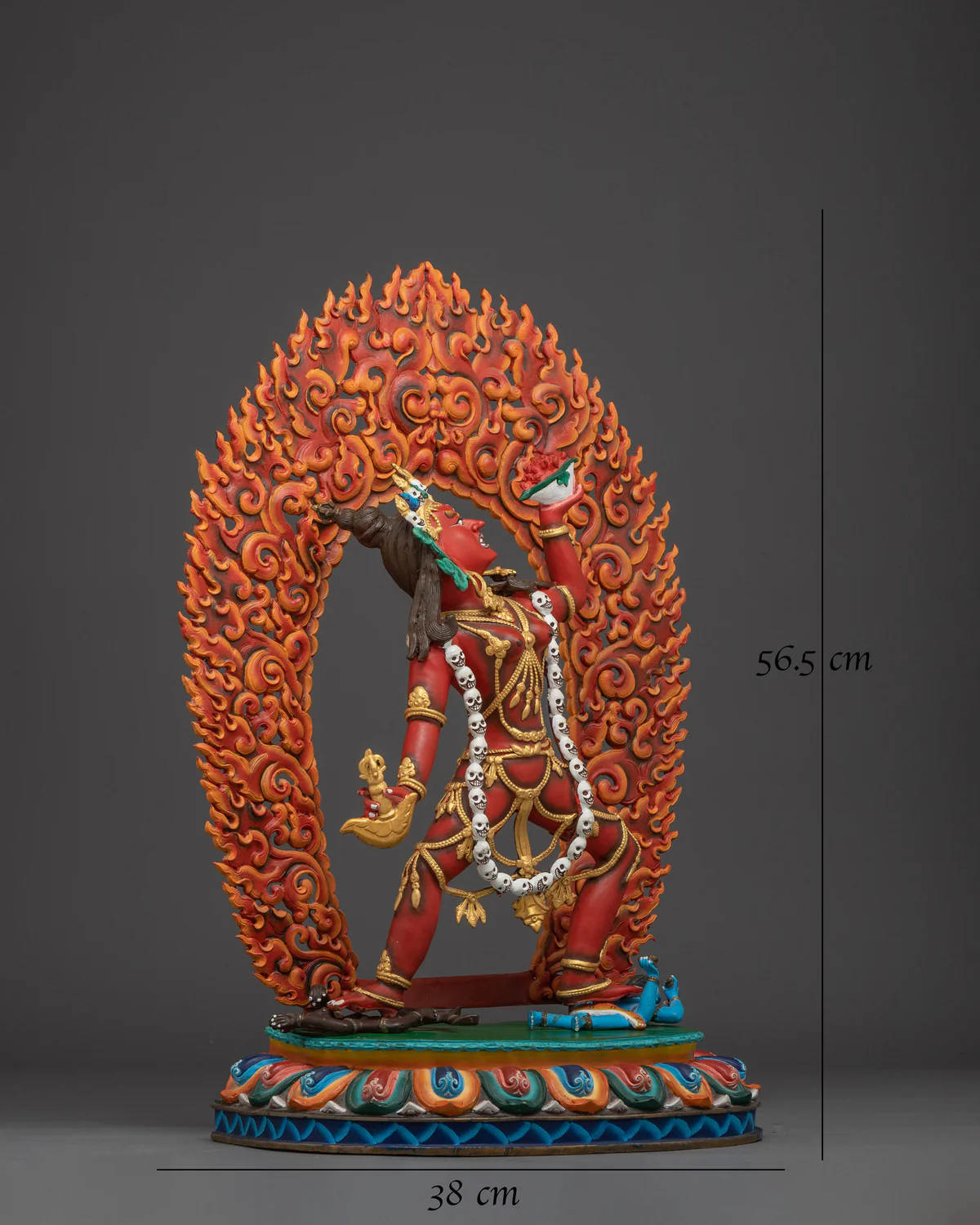
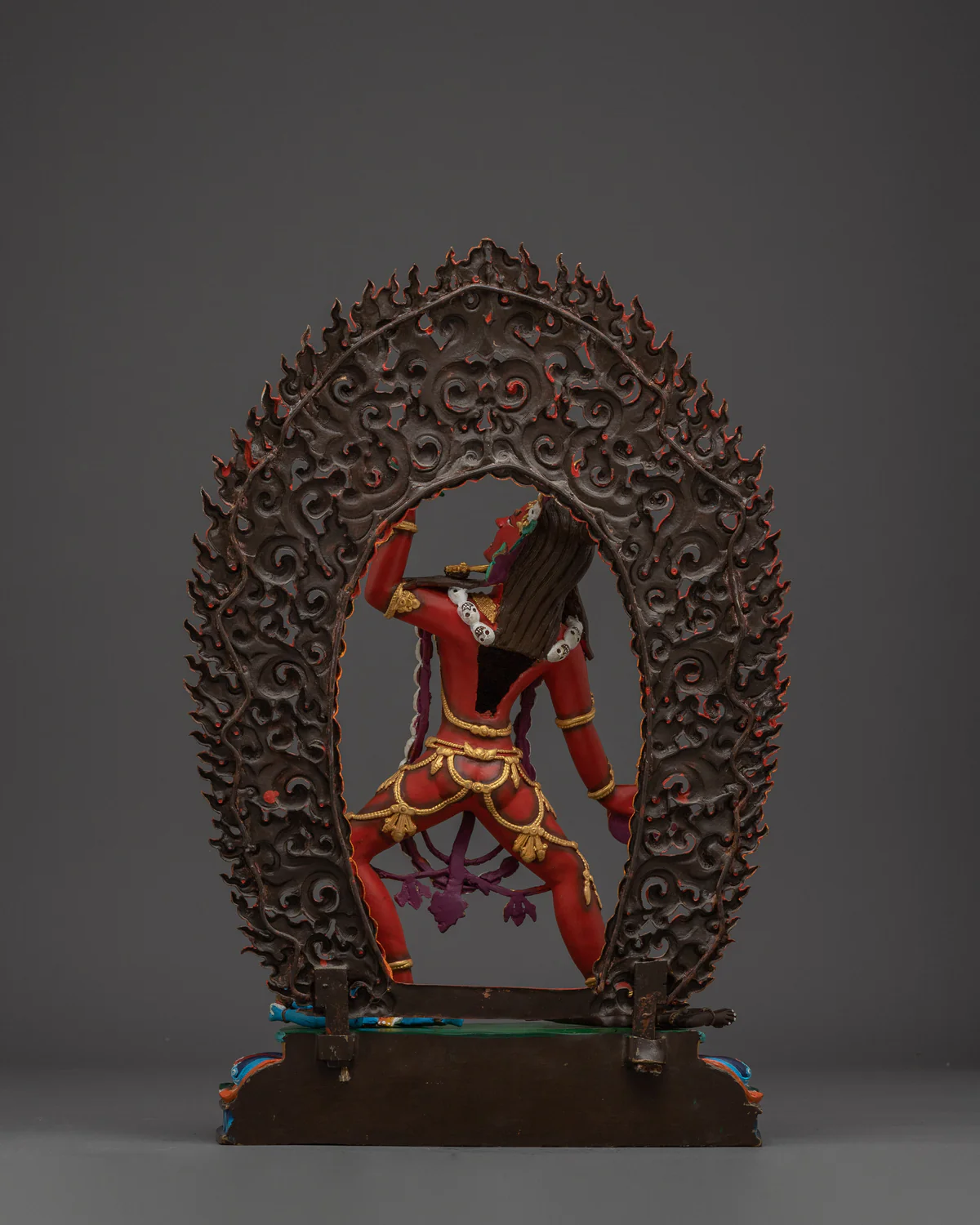
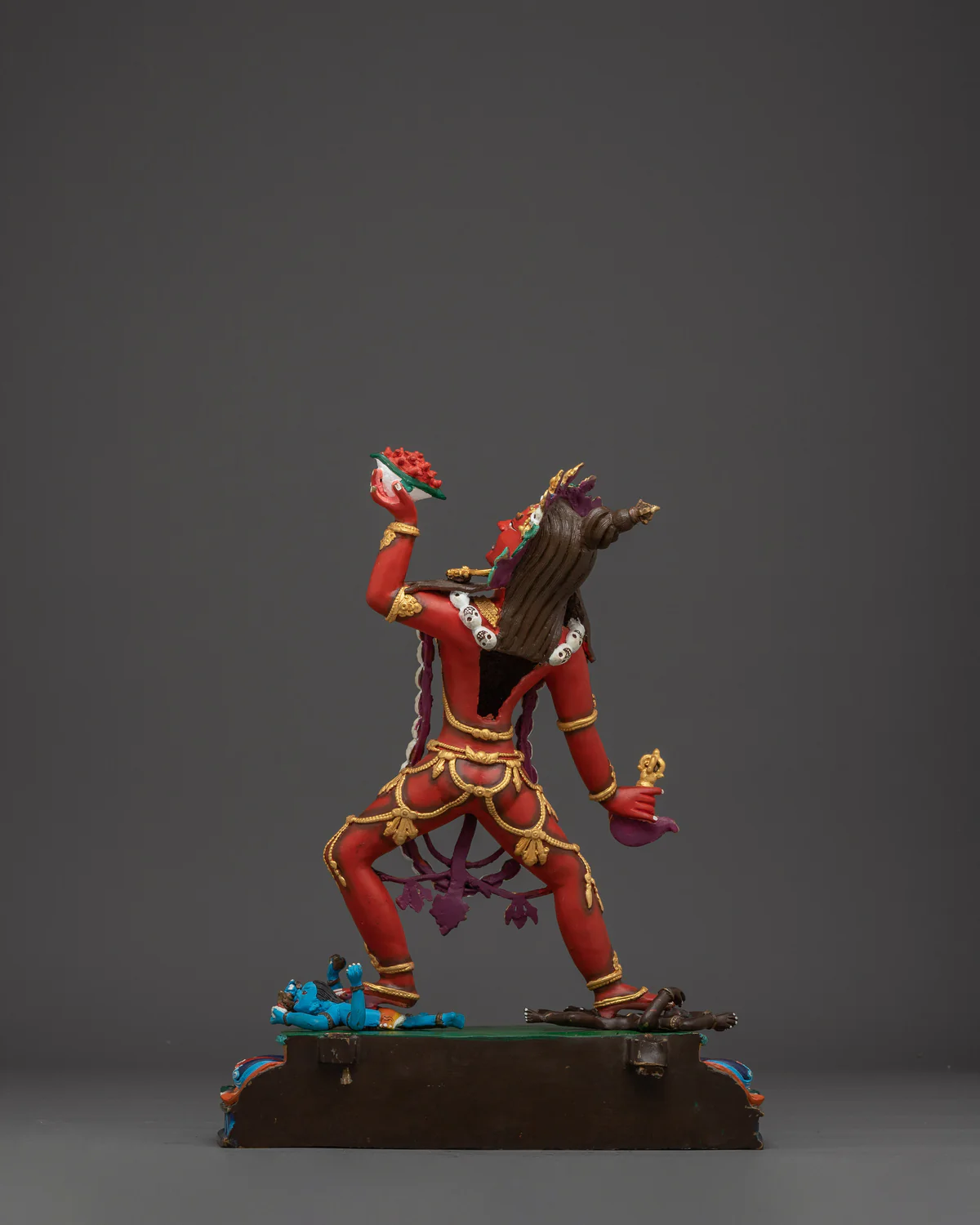
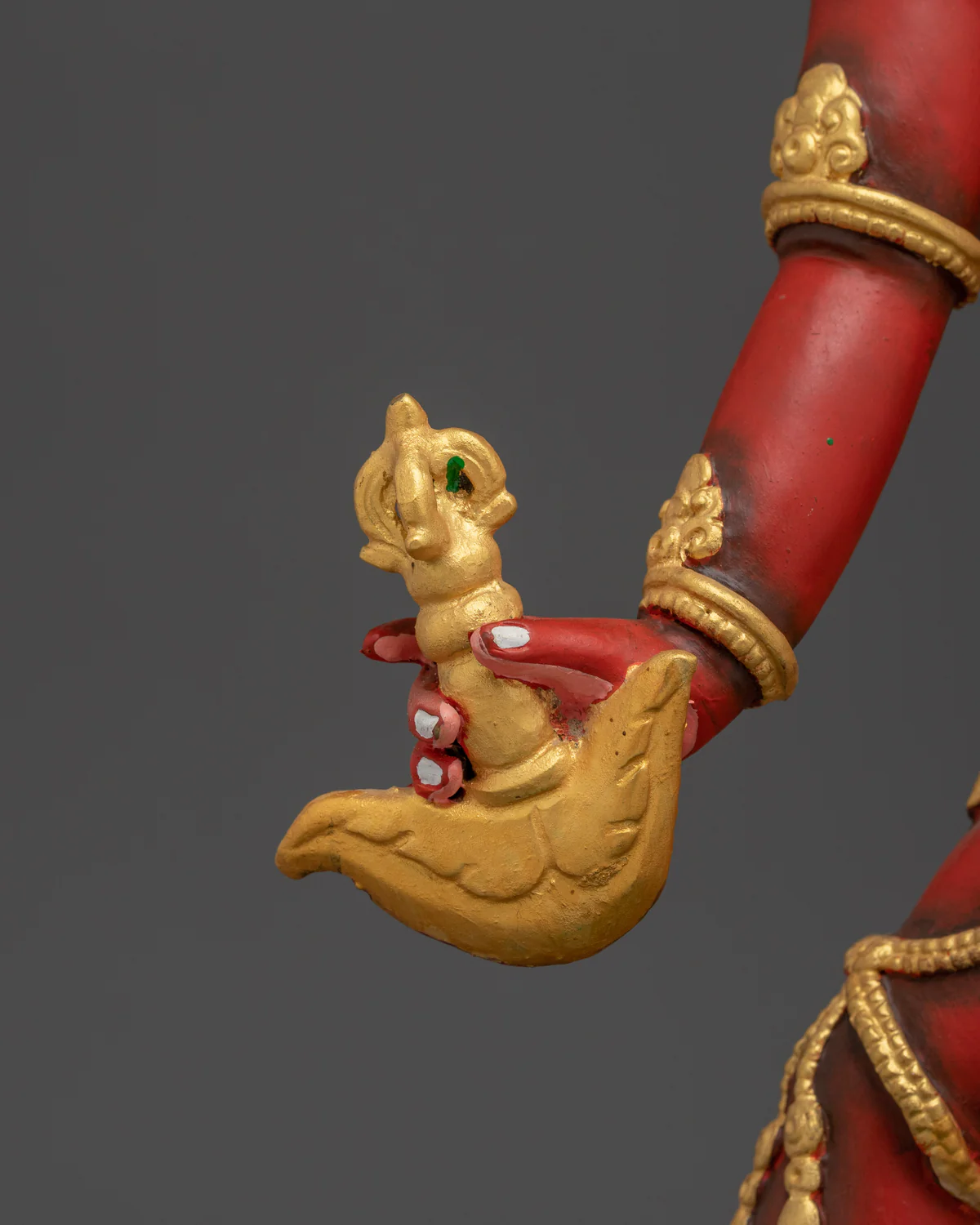
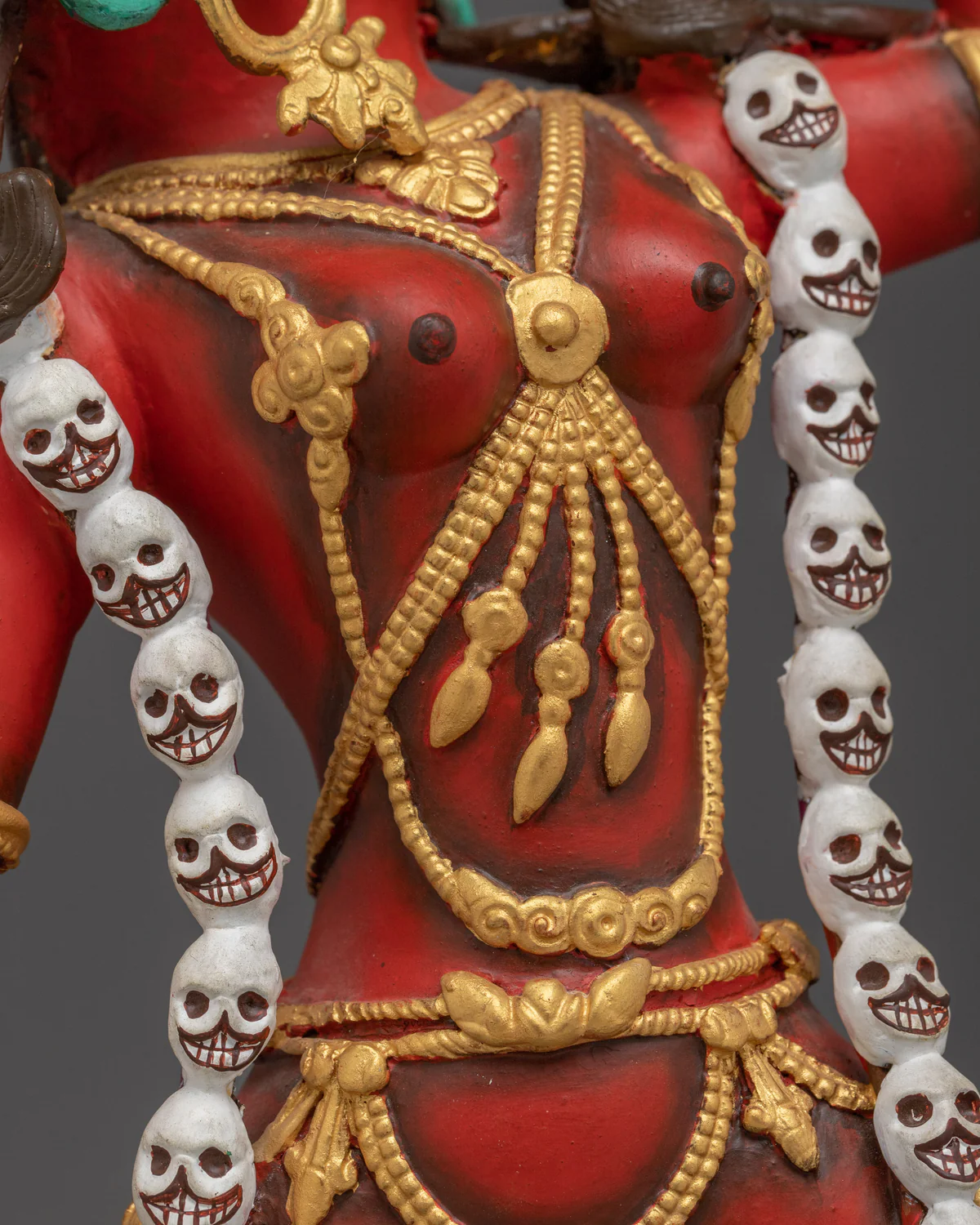
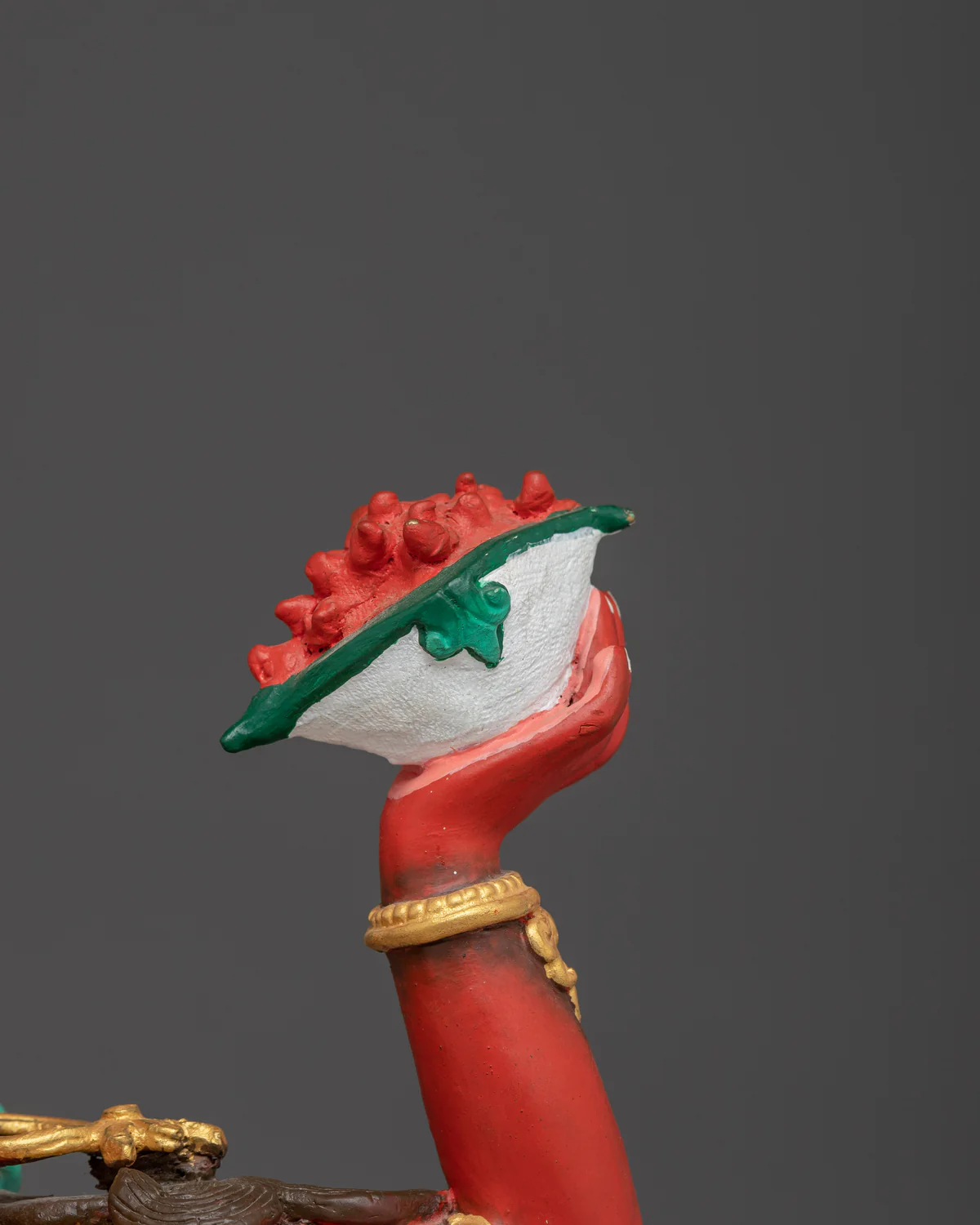
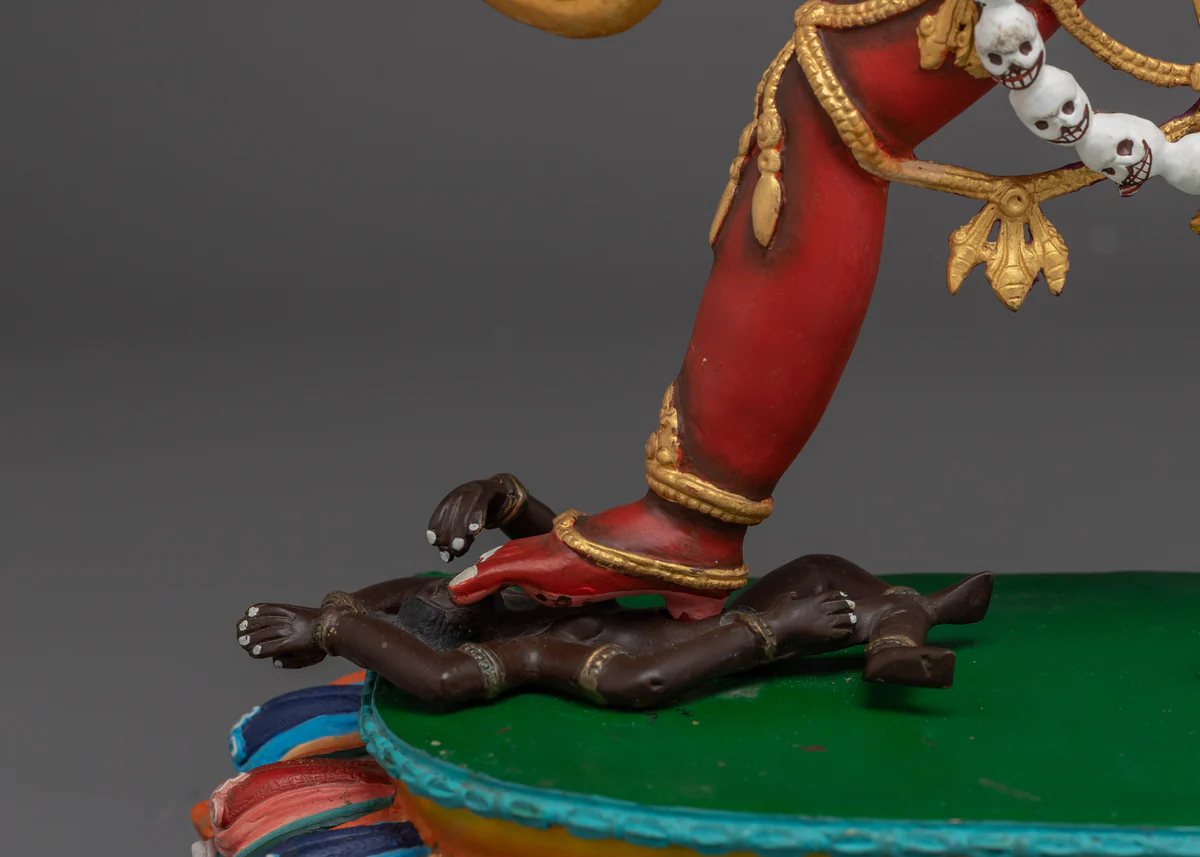
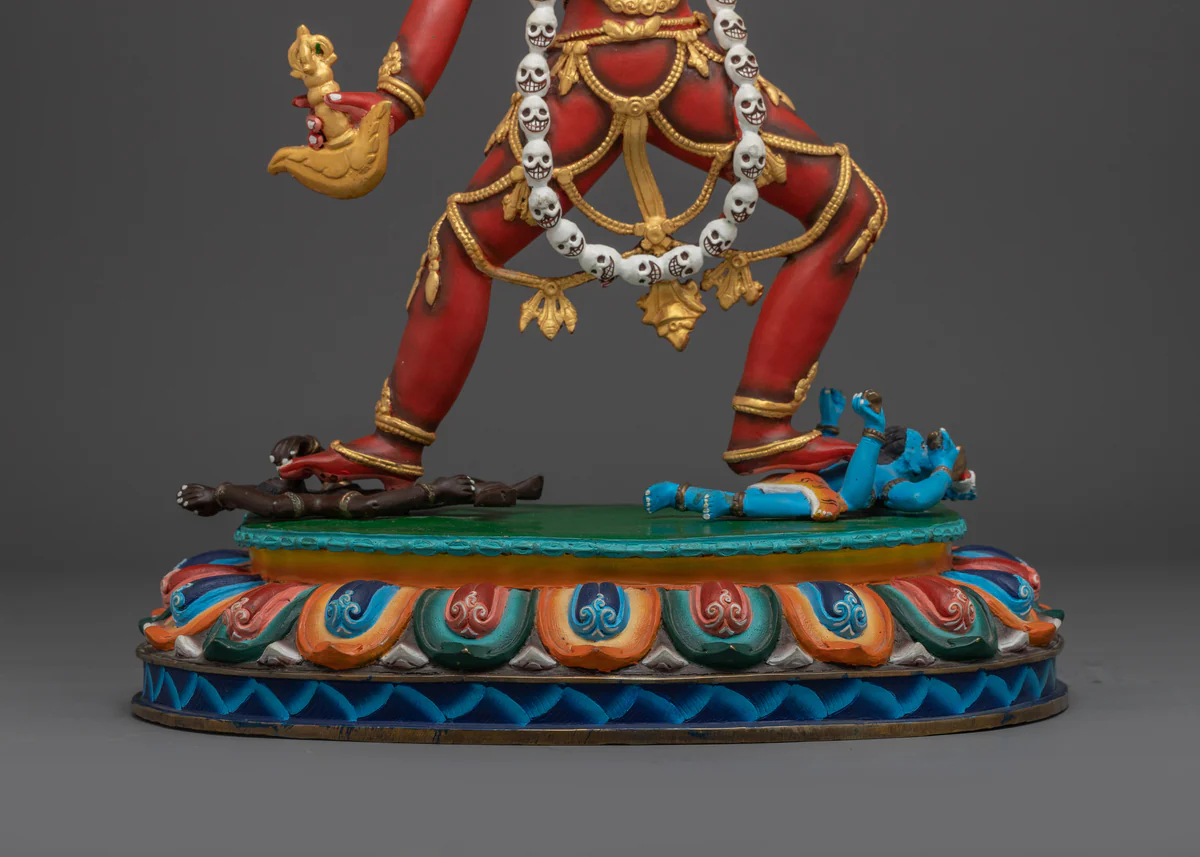
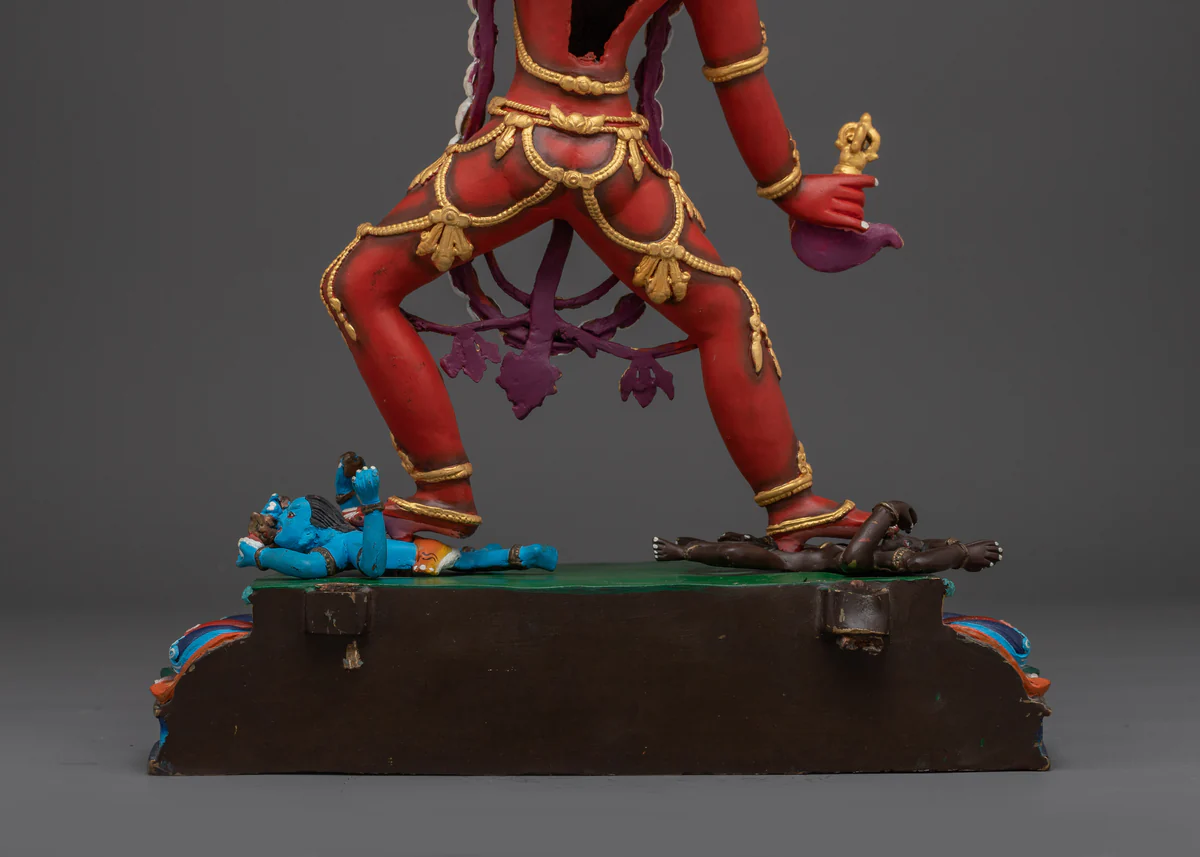
“Featuring the fierce beauty of Vajrayoginī (Dorje Naljorma): our handcrafted red copper statue captures her potent symbolism—the kartika and skull‑cup, flaming halo, youthful posture, and skull-adorned crown—all rendered in exquisite relief. An auspicious piece radiating transformation, wisdom, and compassion.”
Who She Is
Vajrayoginī, known in Tibetan as Dorje Naljorma, is revered as a fully enlightened female Buddha and supreme dakini in Tibetan Buddhism. Her name—literally “Diamond-Wielding Yogini”—reflects her radiant embodiment of ultimate wisdom and enlightened method Etsy+15Wikipedia+15Reddit+15.
Icon & Symbolism
-
Fiery red symbolizes her transformative power over desire and ignorance buddha-statues.infobuddhaweekly.com.
-
Eight aspects: she holds a curved dagger (kartika) in her right hand—symbolizing cutting through illusions—and a skull‑cup (kapala) in her left, representing the transformation of ego and attachment Wikipedia+1Wikipedia+1.
-
Youthful, naked form: portrayed as a sixteen-year‑old maiden, her unclothed body signifies freedom from conceptual constraints Dharma Sculpture.
-
Skull crown & necklace: she wears five prominently visible skulls (first five of the six perfections) and often a garland of fifty smaller skulls, symbolizing perfection and the death-to-rebirth transformation dakinitranslations.com+3Dharma Sculpture+3Wikipedia+3.
-
One leg raised & flaming halo: her stance on a dancing posture amid fire shows her dynamic energy and fierce compassion himalayanart.org+13buddha-statues.info+13Etsy+13.
Spiritual Practice & Lineage
-
Anuttarayoga Tantra yidam: She is practiced at the highest level of Vajrayana, engaging both generation and completion stages to transform daily activity into enlightenment paths britannica.com+10Wikipedia+10buddhaweekly.com+10.
-
Methods applied to death and rebirth: practitioners use her techniques to transform the moment of death and experiences in the bardo into opportunities for swift realization Wikipediabuddhaweekly.com.
-
Three major lineages: Naro Khacho (Nāropa), Maitrikhacho (Maitripa), and Indrakhacho—collectively known in the Sakya tradition as the “Three Red Ones”—trace teachings directly from Indian Mahasiddhas to Tibetan schools himalayanart.org+4dakinitranslations.com+4buddha-statues.info+4.
Why She Matters
-
“Sarvabuddha‑ḍākiṇī” – She is considered the essence of all buddhas in dakini form dakinitranslations.com+4Wikipedia+4Wikipedia+4.
-
Great passion, pure and liberative – Her “maharāga” nature is mind burning away ego; offering practitioners a path to harness strong energies and desires into enlightened wisdom Wikipedia+1buddha-statues.info+1.
-
Highly effective & swift benefits – Vajrayogini practice is prized for its relatively short, potent methods suitable for powerful transformation even in degenerate times Wikipedia+15buddhaweekly.com+15dakinitranslations.com+15.
Cultural Significance in Nepal
-
Newar Buddhist temples: Important pilgrimage sites like the Sankhu, Vidhyeshvari (Kathmandu), and Bajrayogini (Sankhu) temples testify to her deep integration in Nepali spiritual life buddha-statues.info+9Wikipedia+9Wikipedia+9.
-
Art & craft traditions: Statues and mandalas of Vajrayogini are central in Tibetan and Nepalese handicrafts, serving as both devotional icons and objects of ritual power.
Reviews
There are no reviews yet.